How languages changed my life:
I was born in London, the Deaf daughter of two Deaf parents who came to England from Ireland after the War. Both my parents used Irish Sign Language, so that was my native language, and when I started the Deaf nursery school at the age of two and half, I realised there was another sign language – British Sign Language (BSL)!
My parents had been lucky, because both of their mothers and most of their siblings in my father’s native Mayo and my mother’s Tipperary had learned to sign with them.
Deaf children whose families didn’t (or even now don’t) learn to sign are in a much more difficult position and often suffer from isolation and huge educational disadvantages.
Sign language is an essential form of communication
Through signing and fingerspelling from my parents and relatives like my Auntie Madge, I also acquired pretty good English. So, by the time I went to school, I was ahead of most of my peers. When I passed the 11+ entry exam to go to Mary Hare Grammar School for Deaf Children at the age of 10, my parents also encouraged me to learn French. I started to learn it from books in my primary school library.
Education was always a struggle for me, like most Deaf children, because Mary Hare was an oral school and we were not allowed to sign. Like many Deaf people, I now think it is a crime if Deaf children are not encouraged to sign, which is their most natural way of communication. If some also want to try and speak, that’s fine, but sign language is vital.
Later, with the support of BSL/English interpreters, I took an MA in Human Resource Management at Newcastle University and other qualifications.
Being Deaf doesn’t stop you learning and excelling at foreign languages
I now have a Deaf son and a hearing daughter. Because I tried to give my son some of the same support I had, he actually came top in French in his first year at high school. Both have taken A’ levels in English language. My son now does a lot of work as a translator from English into BSL and vice-versa, as well as interpreting between different sign languages. My daughter is doing her Level 6 Diploma in BSL and continues to study to become an interpreter one day.
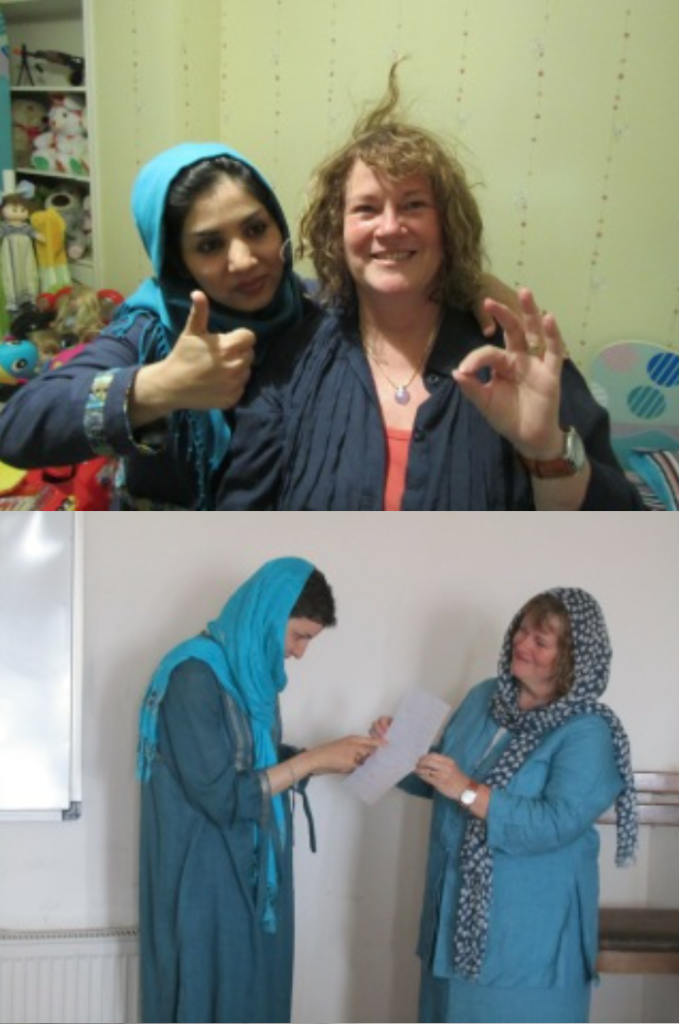
I also now know there are hundreds of different sign languages in the world.
Every country has its own, and I have taught and trained Deaf people and hearing interpreters in various African countries, Iran and India, using their sign languages.
It is probably not realistic to expect all hearing people to learn to sign, but the more the merrier, and any attempt to communicate with Deaf people more visually is always very welcome – and important!
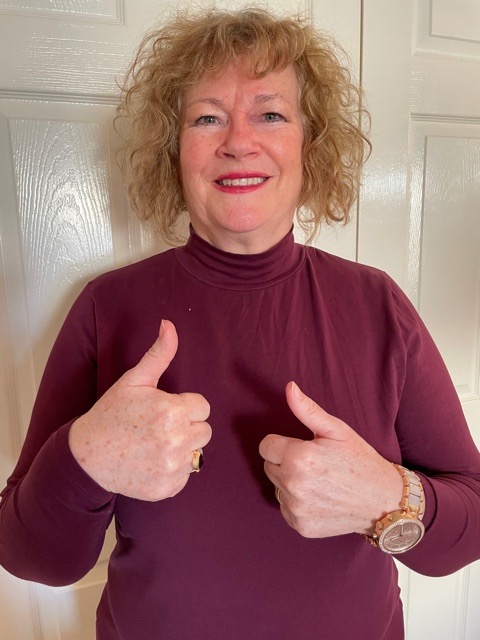
Tessa Padden-Duncan
- Registered Interpreter & Translator for TV
- Researcher and Producer
- BSL Linguistics & Teacher-trainer
- Management consultant
- Becoming Visible
Find out more about British Sign Language
If you are interested in finding out more about Deaf Awareness, British Sign Language and courses available, visit the Becoming Visible website, ‘Learning‘.