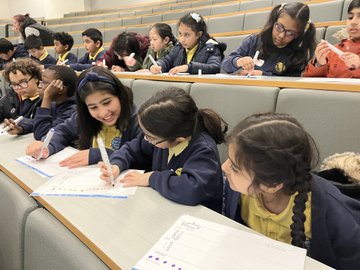
300 children and staff from schools in the North East had a fantastic day on 24th March at the Festival’s Welcome to the Arab World day at Northumbria University in Newcastle.
The Festival aims to celebrate the diverse languages and cultures of the region and our connections to the world, build an understanding and appreciation of other cultures and inspire children and young people to want to find out more. We also want to help broaden their horizons and encourage them to continue learning languages and to progress with education. This day of activities exemplifies these aims. As well as finding out lots of new information about the Arab world, children got to learn some Arabic and speak to each other, as well as learning how to write Arabic letters using calligraphy. An added bonus was introducing children to a university campus, most for the first time.
Find out about how children got involved below, as well as the role of British Council and Qatar Foundation International in supporting Arabic teaching and learning and the new Arabic Teaching Council in the North East. A huge thank you to all involved in making the day such a success (see acknowledgements).
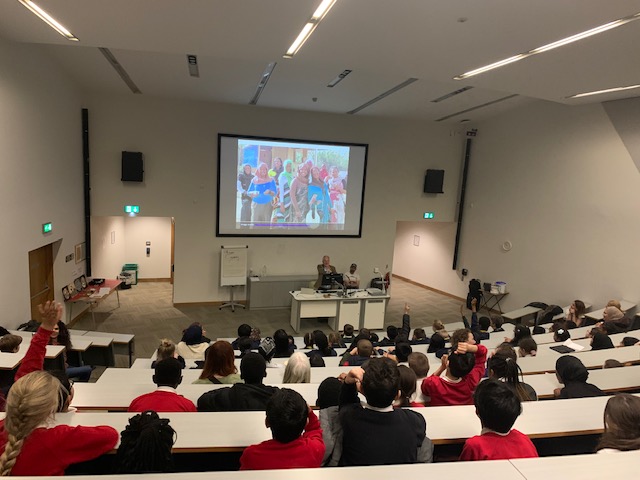
Primary and secondary school pupils learned about the geography and diversity of Arab cultures, heritage, communities, religions, music and languages across South West Asia and North Africa with Jonathan Featherstone, presenting on behalf of Qatar Foundation International (pictured left).
The children enjoyed guessing which countries and regions the people and places depicted were from in the Arab world. They also had a quiz at the end of the day and some great music from Khaled.
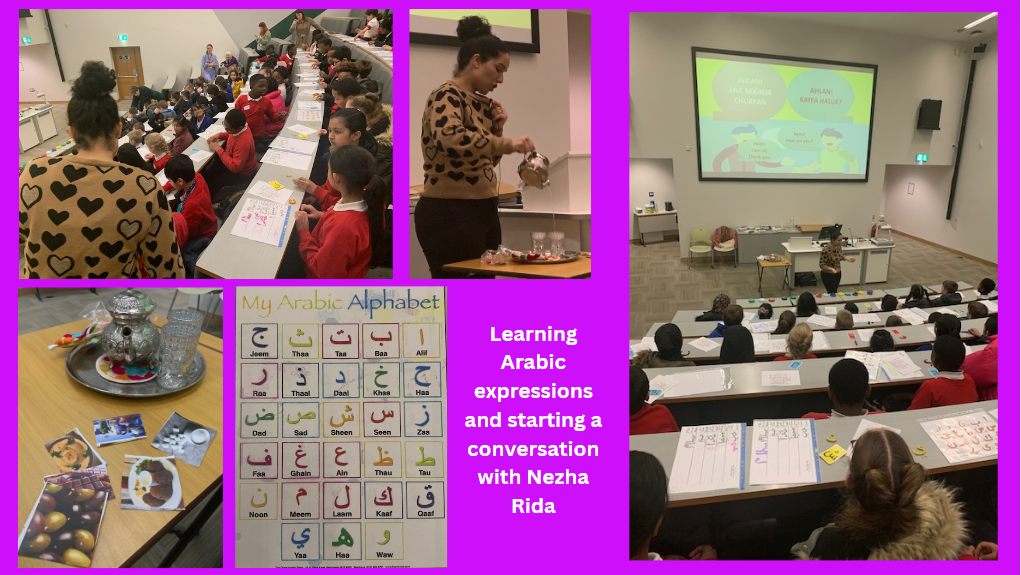
The children had lots of fun learning Arabic with Nezha Rida, making Arabic letters from clay, practicing greetings and basic conversation with great enthusiasm, learning the words for foods and playing a vocabulary game.
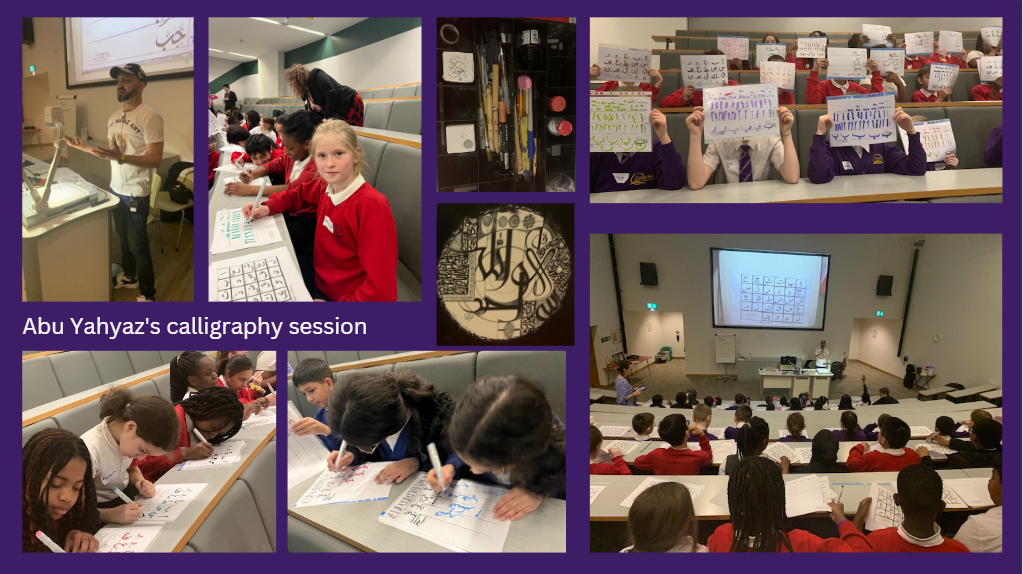
Everyone enjoyed learning some Arabic calligraphy with Abu Yahyaz, who showed them the Arabic alphabet and how to pronounce the letters, that it is written right to left and how to use a calligraphy pen to produce the shapes and letters freehand and using stencils.
Further information and links
- The British Council and Qatar Foundation International are working together to promote the teaching and learning of Arabic language and culture in the UK, aiming to make Arabic a realistic choice for UK Schools. Click here to find out more about the Arabic Language and Culture programme
- Research into long-term language needs identified Arabic as the second most necessary language for the UK over the next 20 years. However, Arabic is taught in five to six per cent of secondary schools in the UK, the majority of which are Muslim faith schools and often only as an extracurricular subject or in the supplementary sector.
- By developing Arabic to the same standards expected of the other major world languages in the British school system, the British Council and QFI are working to make Arabic a viable option for students of any background to explore. There is support for Arabic Teaching Councils, grants for schools, professional development for teachers and much more.
- The first UK Arabic Teachers Council in the North East was launched in December 2022 by Success4All with the Arabic Language Learning Clinic and support from QFI. Click here to find out more.
- This teaching council will regularly convene Arabic language educators across all levels for robust professional development workshops that cater to their needs, discussion of the latest research on Arabic language pedagogy, and evaluation and exchange of teaching strategies, curricula, and resources.
Acknowledgements
We would like to thank all those involved with making this event such a success:
- All the participating schools, the teachers and of course, the pupils who engaged so enthusiastically
- Rachel Flatman and Vicky Gough from British Council and Tony Calderbanks from Qatar Foundation International for providing this event as part of the Festival and free to schools in the region
- Jonathan Featherstone, Abu Yahyaz and Nezha Rida, who were all such engaging and amazing speakers who inspired our children and young people
- Declan Baharini from International Newcastle and Sarah Edgar from Newcastle City Council (School Effectiveness) who liaised to bring this event to Newcastle, engage schools and helped out on the day
- Northumbria University for providing the venue free of charge and Ailsa Ingham and the Estates team for the wonderful support beforehand and on the day