
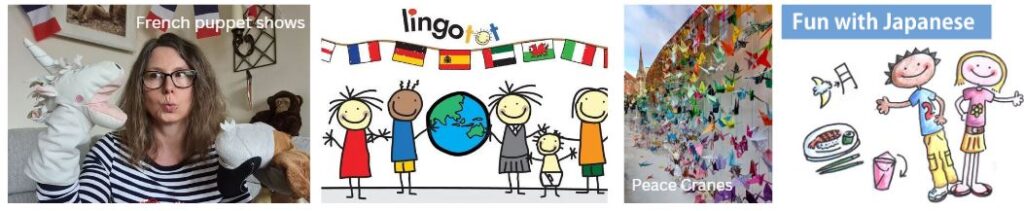
We’ve had an amazing response to our language activities and events for children in this year’s festival, with over 30,000 taking part, many of them in early years and primary schools. There is a serious purpose behind all the Festival fun for the younger children.
By taking part in fun and enjoyable language learning experiences, it supports their holistic development, fostering engagement, social interaction, confidence and a lifelong love for languages and learning about other cultures, as well as sharing their own diverse languages and cultural heritage.
The Festival has provided many opportunities for schools and children from early years and primary to have fun with languages and learn about different cultures. Children have been involved in making paper birds as part of the Peace Cranes project, singing the Happy song in different languages, writing poetry for Mother Tongue Other Tongue from January. In March, children have been having fun with Lingotots activities and French Puppet Shows, visiting Great North Museum and exploring their treasures through a languages lens, taking part in world cultures events (Japan Day, Arab World Day, Bangla Day, Welcome to China), or taking part in African or Japanese workshops and many more activities.
By providing Festival fun we want to inspire younger children to continue learning and developing skills and curiosity that will inspire them for their future learning and lives:
- Positive Association with Learning: Fun language learning experiences create positive associations with learning itself, fostering a lifelong love for acquiring new skills and knowledge.
- Enhanced Engagement and Retention: When children are engaged and having fun, they are more likely to retain what they learn. Fun activities stimulate different parts of the brain, aiding in memory retention and language acquisition
- Development of Social Skills: Fun language learning activities often involve interaction with peers, parents, or educators, fostering the development of social skills such as cooperation, communication, and empathy. Collaborative language learning games and activities encourage teamwork and cooperation among children.
- Cultural Exploration and Appreciation: Introducing children to diverse cultures and languages in an enjoyable way, promoting cultural appreciation and understanding from an early age. Through songs, stories, and games, children can explore different cultural traditions and practices.
- Boosted Confidence and Self-esteem: Success and enjoyment in language learning activities boost children’s confidence and self-esteem. Celebrating milestones and achievements in a fun learning environment reinforces children’s belief in their abilities and encourages them to continue learning.
- Stimulation of Creativity and Imagination: Participating in something fun stimulates creativity and imagination, as children engage in imaginative play, storytelling, and creative expression in the target language.
- Development of Motor Skills: Many language learning activities involve physical movement and coordination, supporting the development of fine and gross motor skills. Actions, gestures, and movements associated with language learning reinforce vocabulary and language concepts while promoting physical development.
- Family Bonding and Connection: Doing something fun together provides opportunities for families to bond and connect while engaging in shared experiences. Singing songs, playing games, and reading stories together in the target language strengthen familial bonds and create lasting memories.
- Long-term Motivation and Persistence: Fun language learning experiences instil a sense of curiosity and motivation that can fuel long-term language learning efforts. Children who associate language learning with fun are more likely to persist in their language learning journey and continue developing their language skills over time. Creative language games and exercises encourage children to think outside the box and express themselves in new ways.